

This week I have set the alternative psalm for the Sunday before Lent, Psalm 99, rather than Psalm 2. This is partly because it is shorter, but also because it comes up again later in the year. Translating and setting all the Principal Service lectionary psalms is a massive undertaking, so anything that saves a little time is very helpful!
Psalm 99 contrasts God’s rule with that of earthly autocratic rulers. God’s might and authority is greater than that of the rulers of other nations, but God’s justice and responsiveness to his people is also greater.
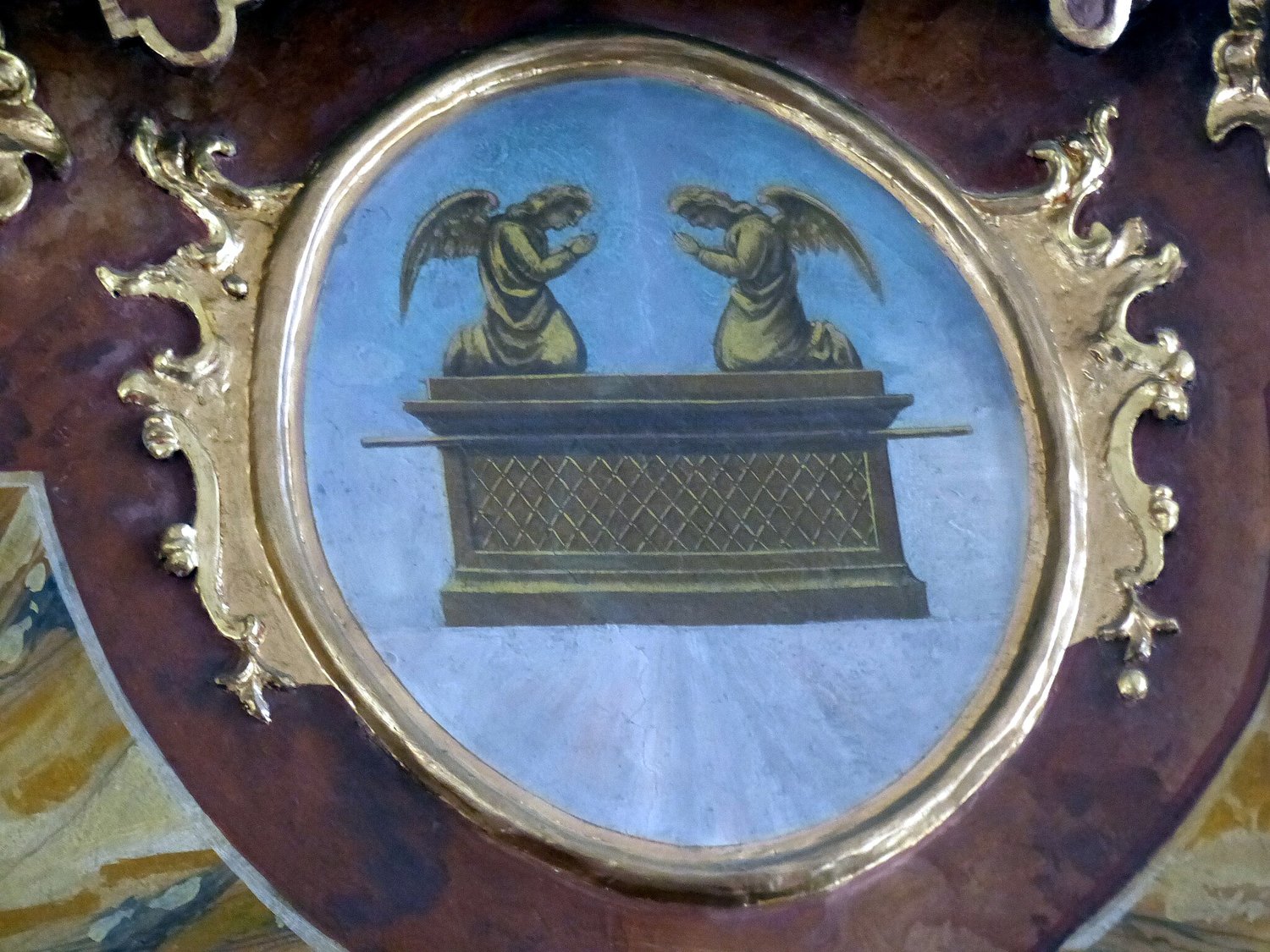
In verse one, ‘tremble’ could be referring to people trembling in fear or with excitement – guess it depends on your perspective! God is described as ‘sitting between the cherubim’ (some looser translations have ‘enthroned’). In this phrase the preposition (between) has to be inferred. Some translations use ‘above the cherubim’, interpreting the location of God’s throne as being at the top of a hierarchical cosmology. Others, use ‘between’, locating God’s symbolic and visible presence in the Ark of the Covenant, which had two cherubim on the lid. I have chosen to use ‘between’ because the next line talks about the Lord in Zion, the subsequent location of the symbolic presence of God (in the Jerusalem Temple) and also because there are further allusions to the Ark later in the psalm.
1 The Lord reigns, the nations tremble,
God sits between the cherubim and the earth shakes.
2 The Lord is in Zion,
great and high above all nations.
The second stanza speaks of God’s holiness and justice. In verse four, the Hebrew uses the possessive to describe an attribute of the king that itself does something. This seems a strange idea in English and some translations dodge it by using a loose translation, ‘the mighty king loves justice’, while others are more literal and have ‘the king’s strength loves justice’ or ‘the strength of the king loves justice’, both of which sound a little strange to me (how can strength love anything?). After some thought, I decided to use 'the king's might', interpreting it as (perhaps) a name for God, thus making it possible to infer that the king derives his might from the God who loves justice.
3 They praise your great and awesome name, for it is holy.
4 The king’s might loves justice.
You have established fairness,
You uphold justice and integrity in Jacob.
Verse five is used for refrain: ‘Exalt the Lord our God and worship at his footstool for he is holy.’ According to Genesius’ Hebrew Chaldee Lexicon says, ‘The footstool of God is a name given to the ark of the covenant above which his presence was believed to be [it was believed to be so, because it really was so].’ Although this is unlikely to be common-knowledge for most congregations, I have not attempted to explain the allusion in the translation as I think it is sufficiently evocative of worship in any case.
I have just noticed that, against my principles, I have failed to change the pronouns in this verse. It is remarkably tricky to do this consistently and this one fell through the gaps. I will correct it in due course, but meanwhile, if it bothers you, you’ll need to pencil in this correction: Exalt the Lord our God and worship at God’s footstool for God is Holy.
Verse six is particularly wordy and cumbersome. ‘Moses and Aaron among God’s priests’ was simple enough, but the description of Samuel as among ‘those who called on the Lord’s name’ was more problematic. I considered describing Samuel as a prophet but in the end I decided I couldn’t justify that, not least because modern understandings of ‘prophet’ might be less helpful than retaining the description. Either way, it was difficult to fit the verse into the usual two lines and so we have a three-line stanza with one repeated quarter of the chant.
In verse seven, I have chosen to use ‘cloudy pillar’ as the description of the theophanic cloud from which God speaks as it is both neater than ‘pillar of cloud’ and echoes the line in the hymn ‘Guide me, O thou great redeemer’.
6 Moses and Aaron among God’s priests
and Samuel among those who called on the Lord’s name,
they called to the Lord, who answered.
7 God spoke to them from the cloudy pillar,
they kept the laws and decrees God gave them.
In verse eight, I have made ‘them’ explicit (all those who called on the Lord in verse six). All translations of this verse have God forgiving but the end of the verse varies quite a bit. The Authorised Version has, ‘though thou tookest vengeance of their inventions’, which is quite impenetrable. The New King James is slightly clearer, updating it to ‘though you took vengeance on their deeds.’ A few translations have God as ‘an avenger’ of ‘wrongdoings’ (ESV. RSV), ‘sinful actions’ (CSB), ‘evil deeds’ (LSB, NASB) or ‘evil practices’ (AMP). Several have God punishing a similar range of things; the BCP has ‘punishedst their own inventions’. Meanwhile, Common Worship changes the sense of the phrase altogether and has ‘pardoned them for their offences’. I have decided to use ‘yet punished them for their sins’, retaining the original meaning in a clear and concise way.
Verse nine is very similar to verse five (which is the refrain in this setting), only now the focus of worship has moved from the Ark of the Covenant (God’s footstool) to the holy mountain, Jerusalem.
8 O Lord our God, you answered those who called,
You were a forgiving God, yet punished them for their sins.
9 Exalt the Lord our God and worship on the holy mountain
for holy is the Lord our God.
Click through for the full text and music to Psalm 99 for the Sunday before Lent. Everything is still available on a 'pay what you think it is worth' basis.