

Apologies for the lack of posts over the last couple of weeks. I'm back this week with Psalm 1.
1 Blessed are those who take no advice from the wicked,
neither following sinners, nor sitting with the scornful.
2 They delight in the law of the Lord
and meditate on it day and night.
Psalm 1 opens with ‘Blessed the man’ which I needed to make gender neutral. The neatest way of doing this is to use the plural those/they.
Verse one took quite a bit of work to get down to a manageable length.
The Hebrew verb in the first line is in the perfect tense and can be translated as ‘has not walked/gone/lived’. Many translations use the present tense: ‘does not walk’. However, the object is ‘advice’[1], so a more idiomatic collocation would be ‘has not followed’ or ‘does not follow’. This gives a draft translation of this phrase as: ‘Blessed are those who have not followed the advice of the ungodly’.
More idiomatic still, would be to replace the negative ‘does not follow’ with a positive ‘ignore’. This is a good option because it has far fewer syllables, but has the disadvantage of not being a verb that works in the next line so it would not be possible to collapse the lines together.
A literal translation of the first clause of line two would be, ‘and have not stood in the way of sinners’. However, this doesn’t really work in English, because to ‘stand in the way of’ someone is to stop them, which is the opposite of what is meant. The meaning here is essentially to spend time with sinners and do what they do. I considered ‘and have not followed the way of sinners’ and then shortened it to ‘and neither follow sinners’.
It made sense to translate the second clause literally: ‘nor sit with the scornful’ but it was interesting to see what other translations have here. The New Living Translation has, ‘join in with mockers’ while the New International Version has, ‘sit in the company of mockers’. I wasn’t sure about using ‘mockers’ as it is not a very common word and sounds rather comical! The English Standard Version has ‘scoffers’ and the New English Translation has ‘sit in the assembly of scoffers’. Which is also rather unusual and comical.
In the end I was inclined to stick with scornful (which is what is in the CW psalter). At this point I had got to:
Blessed are those who ignore the advice of the wicked,
and neither follow sinners, nor sit with the scornful.
This is still unusually long, so I considered ways of collapsing the first two ideas.
My first idea was to use, ‘Blessed are those who ignore the wicked and sinful’, but this removes the idea of advice and just ignoring them is not the same as ignoring advice they are giving.
Another option could be, ‘Blessed are those who take no advice from the wicked and sinful’, but this makes the first line even longer. Stopping after ‘wicked’ however, gives a line one syllable shorter than my previous version, and every little helps!
I also decided to change the second line, using the continuous ‘neither following… nor sitting’ which actually made it one syllable longer, but improved the rhythmic flow.
Verse two was much simpler, with the main issue being to unpick the pronouns. The Hebrew uses the masculine singular for both the blessed person (which I am going to pluralise to make gender neutral, matching verse 1) and God.
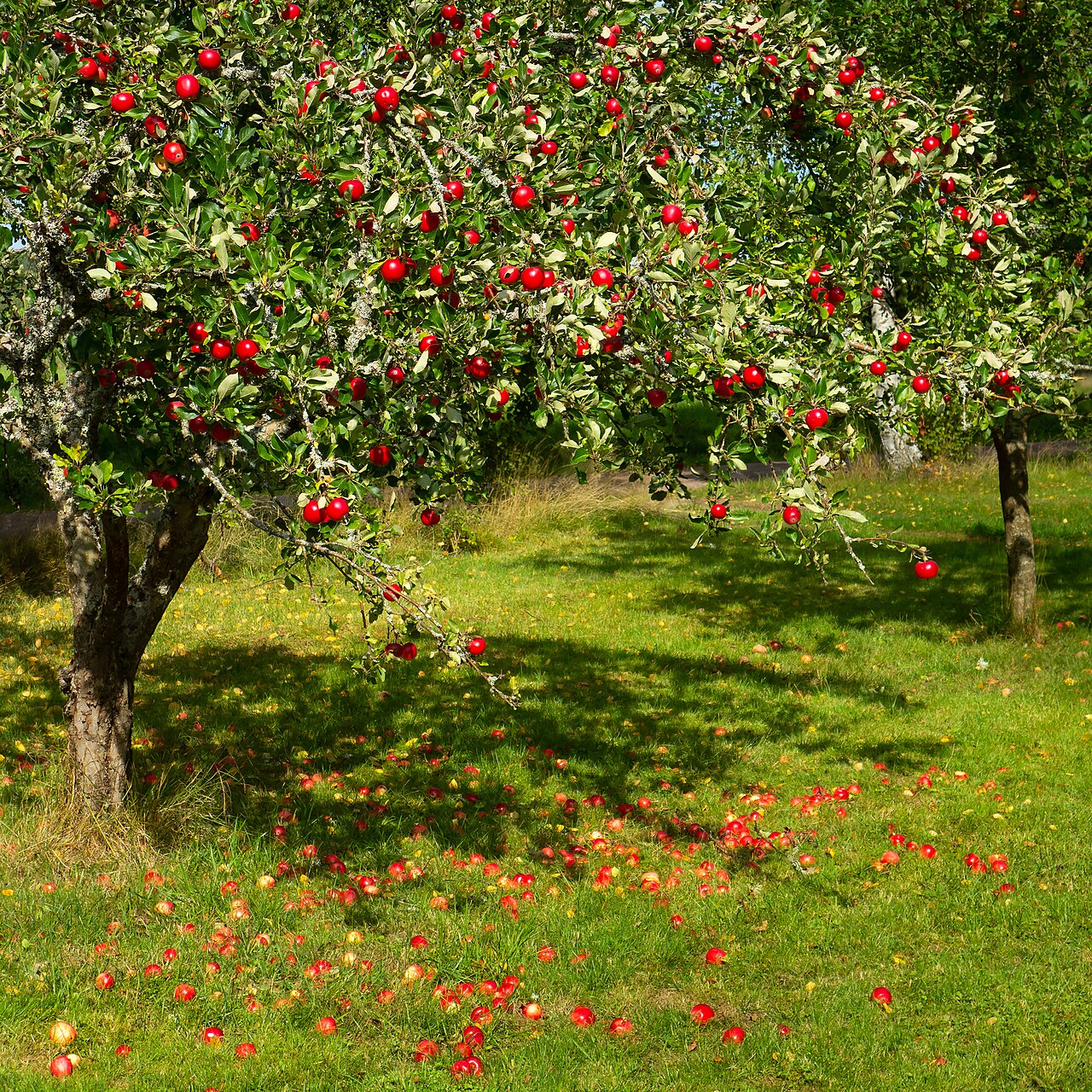
3 The faithful are like trees planted by a stream
that produce fruit for the harvest.
Their leaves do not wither
and whatever they do succeeds.
My first draft of verse three was: ‘And they will be like a tree planted by the streams of water
whose fruit is produced in its season and its leaf/foliage/leaves not wither and all/everything they do will prosper/succeed.’
Some translations of this verse use the future and others the present tense. The Hebrew is a sequential perfect, which connects the verb to an earlier one and is an unfinished action. In the light of this, I decided to use the present tense.
To make the first line shorter, I decided to make the stream singular and omit ‘of water’ which is superfluous (literally!). I also decided to make the second line active (that produce fruit) rather than passive (whose fruit is produced) as that is both shorter and clearer. I also felt that ‘in its season’ was an unnatural way of saying that trees fruit when they’re supposed to. I considered using ‘in due course’ or but in the end I decided to be a little freer and use ‘for the harvest’. (Incidentally, ‘harvest’ comes from the OE haerfest meaning the season of autumn, so perhaps it is not too free a translation after all!).
I then decided to put it all into the plural to match the plural used for the people in the first stanza (the New Living Translation also does this). Finally, I needed to make the subject explicit as the refrain will interrupt the train of thought. I considered using ‘the blessed’ but in the end decided to use ‘the faithful’.
4 The wicked are not fruitful;
they are like chaff blown away by the wind.
5 Therefore they cannot withstand judgement,
nor join the faithful congregation.
Verse four started out as: ‘Not like that the ungodly for they are like the chaff that the wind drives away.’ I decided to use ‘wicked’ rather than ‘ungodly’ for brevity and consistency. The word order also needed changing to fit English syntax, giving, ‘The wicked are not like that.’ However, this is a problem at the beginning of a stanza as the refrain has (again) interrupted the train of thought. I decided to refer back to the previous verse by using, ‘the wicked are not fruitful’. I also changed the verb in the second line from ‘drive away’ to ‘blown away’ as it seemed more natural.
My initial draft for verse five was, ‘Therefore the wicked shall not stand in the judgement, nor sinners in the congregation/gathering of the righteous/just/good.’
As this continues on from the previous verse, I used a pronoun for ‘the wicked’. ‘Stand in the judgement’ is a literal translation but seemed a bit obscure without further explanation in English. It was interesting to see that while most Bibles stick with this phrasing, the Christian Standard Bible has ‘stand up in the judgment’ (maybe implying ‘stand up to scrutiny’) and the Amplified Bible has ‘stand [unpunished]’. The New English Translation has ‘the wicked cannot withstand judgement’ and the French Louis Segond Bible is similar, with ‘les mechants ne resistent pas au jour du jugement’. I like this interpretation and decided to adopt it, giving ‘Therefore they cannot withstand judgement’.
As in some of my previous psalm translations, I want to interpret the ‘congregation of the righteous/assembly of the godly’ as a synonym for God’s people. However, this doesn’t quite work, as our theology definitely does have (repentant) sinners among God’s people. I therefore decided to use ‘faithful congregation’ and to roll the sinners in with the wicked to make it shorter.
6 The Lord guards the way of the faithful,
but the way of the wicked will be destroyed.
This final verse was quite straightforward. The refrain is based on verses one and two.
The music can be found here. Psalms for All Saints, Remembrance and Christ the King are also available now (and the missing week will be coming as soon as I can manage).
Image Credit: W. Carter, CC0, via Wikimedia Commons
[1] This is quite often translated ‘the counsel of’ but I think most people would hear ‘council of’ which is not the same thing!