

Psalm 80 is one of seventeen ascribed to a poet named Asaph. The text is dedicated to a chief musician – presumably someone with a role something like Director of Music at the Temple in Jerusalem – and there is a description, the precise meaning of which is lost in the mists of time, but which may be an indication of the tune or type of music to be used with the text.
In Christian liturgy, this psalm has long been associated with Advent, with lines from it appearing in the Matin Responsory for Advent Sunday, which is best known today in the setting based on a Palestrina Magnificat. In the first stanza, I have chosen to maintain the familiar associations by using ‘Joseph like a sheep’ (rather than Joseph like a flock (NRSVue and Common Worship)) and ‘Stir up your strength and come’ (rather than ‘stir up you might’ (NRSVue) or ‘stir up your mighty strength’).
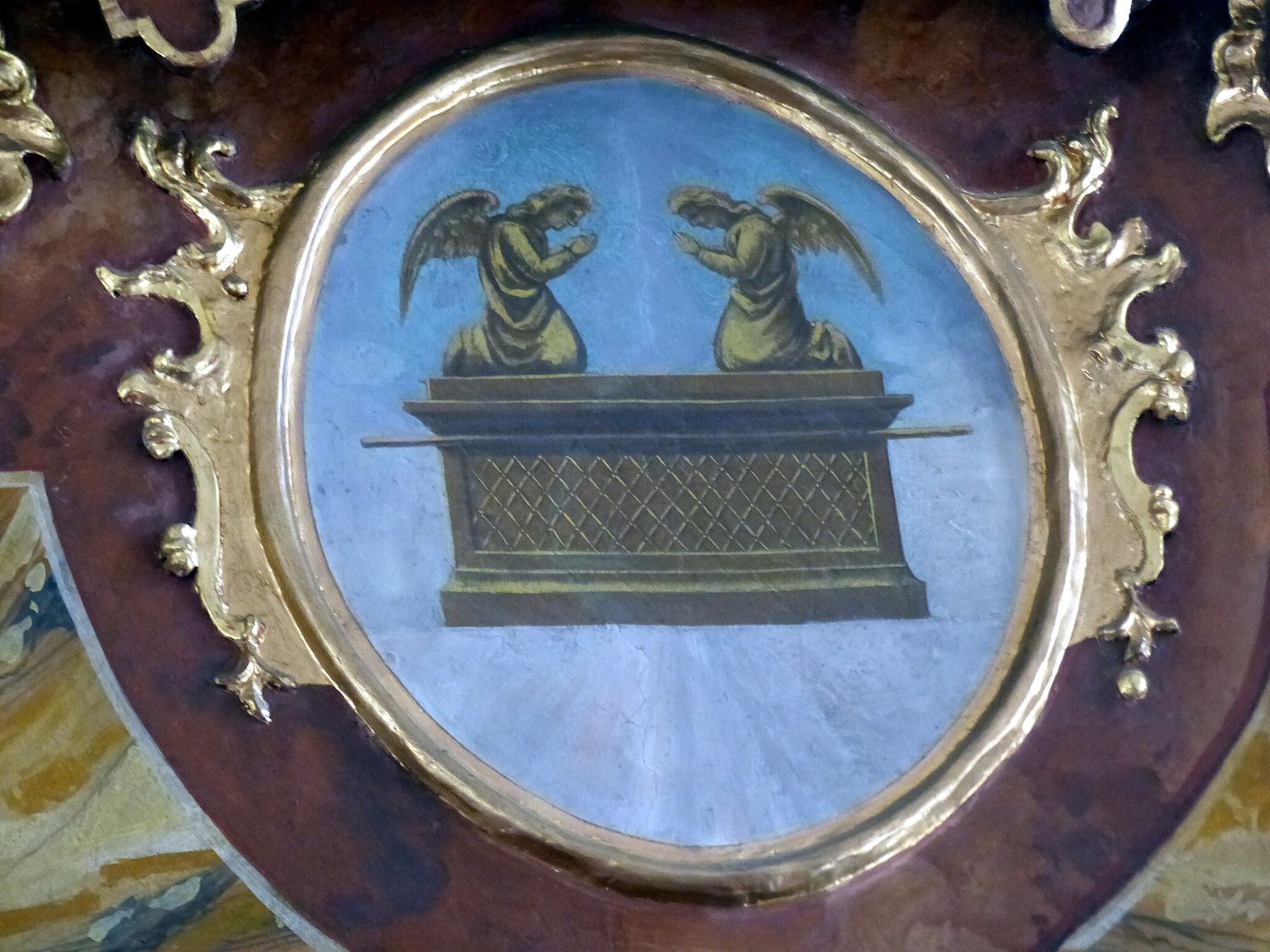
In verse two I have changed the sentence structure to make the text flow more smoothly. The reference to God as being seated between the cherubim – a species of angel – evokes the ark of the covenant, which had two cherubim on top of it. I therefore read the first stanza as a depiction of the exodus, with the tribes being led out by God’s light. In his commentary on this psalm, Robert Alter notes that Joseph, Ephraim and Manasses were tribes that settled in the northern kingdom, while Benjamin was a southern tribe. He also notes that the Septuagint includes the heading ‘concerning the Assyrians’ and suggests that the psalm was written at a time when the northern kingdom was under threat from that empire.
1 Hear, O Shepherd of Israel who leads Joseph like a sheep!
2 Shine out before Ephraim, Benjamin and Manasses,
you who are seated between the cherubim!
3 Stir up your strength and come to deliver us.
I have taken verse 4 (which reappears as verses 8 and 20) as the refrain. Many translations render the verbs as imperatives calling on god to ‘turn us’ and ‘shine the light of your countenance’. I have avoided ‘countenance’ as I am not sure what that is supposed to mean! A more literal translation would call for God’s face to shine, but since ‘face’ is often used to signify presence, I have chosen to render it as:
4,8,20 O God, turn us back to the light of your presence and we shall be saved.
The second stanza expresses Israel’s sense of abandonment by God. In verse five, many translations ask why God is angry at the people’s prayer, but I have chosen to maintain the metaphor that appears in the Hebrew, where the word ‘ashan’ literally means ‘to smoke’, by rendering it as ‘fume at your people’s prayer’.
5 Lord God of hosts, how long will you fume at your people’s prayer?
6 You feed us the bread of tears, giving us many tears to drink.
7 You set us at strife with our neighbours,
and our enemies mock us behind our backs.
For Christians, the third stanza clearly alludes to Christ as the Son of Man. I have used the idiomatic ‘right-hand man’ as it gives the sense of the words better than more usual constructions such as ‘the man at your right hand’ (CW). Most translations have ‘made strong for yourself’ but I think ‘for your own sake’ renders the idea more fluently in English. The psalm ends with the people’s likely response to God granting their wish to seeing the light of Christ.
18 May your hand be upon your right hand man,
on the Son of Man, whom you made strong for your own sake.
19 Then we will not turn away from you,
give us life and we will call upon your name.
The music for this setting is available in the shop via this link: https://psalteryandharp.uk/b/SqEc4